English| EUR
Suggested for you
More currencies
Choose a language
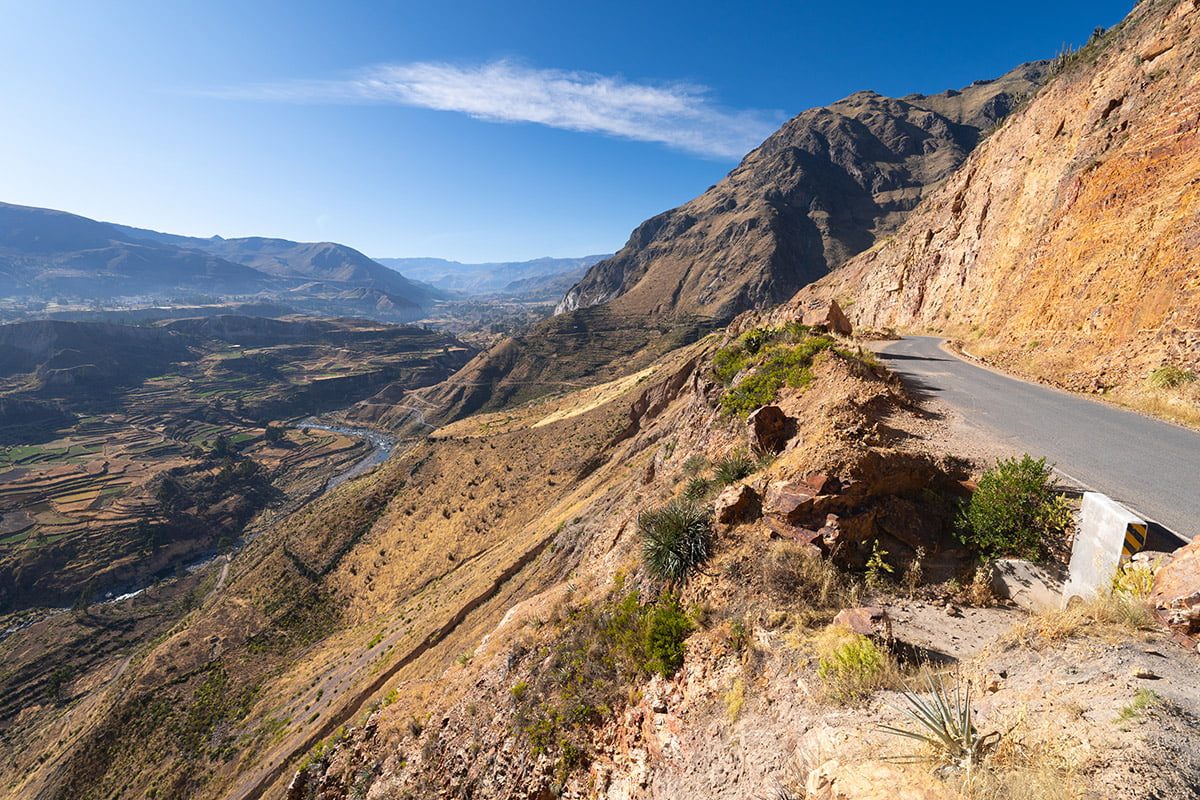
Colca Canyon sits 165 kilometers north of Arequipa across the Reserva Nacional Salinas y Aguada Blanca, accessible by paved highway that climbs to 4,910 meters at Patapampa Pass before descending into Caylloma Province. Most visitors base themselves in Chivay or continue to smaller villages along the canyon rim. The journey takes three to four hours depending on your departure point and stops.
Quick answer
Three primary options connect Arequipa to Colca Canyon: public buses departing from Arequipa's terminal terrestre to Chivay (3.5 hours, 15-25 PEN), private transfers arranged through hotels or agencies (3 hours direct, 150-300 PEN per vehicle), and organized tours that include transport, guide, and canyon entrance (departing 03:00-04:00 for condor viewing). Public buses run multiple morning and afternoon departures daily; private options offer flexible timing and hotel pickup throughout Arequipa.
The Reserva Nacional Salinas y Aguada Blanca checkpoint at kilometer 35 collects a 15 PEN park entry fee from all vehicles entering the protected zone—keep your receipt, as some buses request it on return journeys. Beyond the checkpoint, the highway climbs steadily through high-altitude puna grassland where vicuñas graze in herds visible from the road. Patapampa Pass marks the route's highest elevation at 4,910 meters above sea level. Most buses and tours pause here for photographs of the Misti, Chachani, and Ampato volcanoes, though the stop lasts five to ten minutes given the thin air. Altitude-related discomfort peaks in this section; travelers prone to soroche (altitude sickness) benefit from coca tea consumed in Arequipa the evening before departure. The descent toward Chivay begins immediately after the pass, dropping 1,260 meters over the next hour through terraced pre-Inca agricultural zones still farmed by Collagua communities. Chivay serves as the canyon's transport hub and accommodation center, positioned at the eastern entrance to the valley. Buses terminate at the town's small station three blocks from the Plaza de Armas. Travelers continuing to Cruz del Condor viewpoint—the canyon's most-visited condor observation point—transfer here to colectivo vans that depart when full, typically every 30-45 minutes between 05:00 and 10:00. The viewpoint lies 50 kilometers west along the canyon's north rim, accessible via the villages of Yanque, Achoma, and Maca. Return colectivos run until mid-afternoon. Organized tours from Arequipa to Colca Canyon typically follow one of two formats: single-day excursions departing before dawn to reach Cruz del Condor during optimal condor flight hours (06:00-09:00), or two-day itineraries with overnight accommodation in Chivay or canyon-rim villages. Single-day tours spend roughly 12-14 hours round-trip with limited time at each stop; two-day options allow evening thermal bath visits in Chivay and sunrise condor viewing without pre-dawn departure from Arequipa. Both formats include bilingual guides and the 70 PEN Boleto Turístico del Colca conservation fee required for all foreign visitors to the canyon zone. Private vehicle transfers eliminate fixed schedules and allow customized routing through the canyon's villages. Drivers familiar with the route identify roadside stops for wildlife photography—flocks of Andean geese, Chilean flamingos at seasonal lagoons, and occasional Andean foxes near dawn. The paved highway requires no special vehicle clearance, though fog frequently reduces visibility on the pass between June and August. Fuel stations exist only in Arequipa and Chivay; the 165-kilometer route offers no services between these points.
“Patapampa Pass marks the route's highest elevation at 4,910 meters above sea level, where most vehicles pause for photographs of the Misti, Chachani, and Ampato volcanoes.”
Colca Canyon is located in the Caylloma Province of the Arequipa Region. Travelers typically depart from Arequipa city via bus or private vehicle to reach the canyon access points.
Terminal Terrestre Arequipa to Chivay
Arequipa city center to Colca Canyon
Route PE-34A to Chivay
Plan your arrival to the Cruz del Condor viewpoint between 06:00–09:00, which is the optimal time for observing Andean condors.
This schedule suits travelers departing Arequipa early morning to reach the canyon rim by mid-morning. The journey spans approximately 3–4 hours one-way, with viewpoint visits clustered around optimal condor observation hours.
Leave the city center heading north via Route 34. The drive climbs through agricultural valleys before ascending to high-altitude terrain; carry motion sickness remedies if prone.
Many routes pass through Chivay, the gateway town. Stop briefly for restrooms or snacks; the main plaza has basic facilities and cafés.
Drive 30–45 minutes west from Chivay along the canyon rim road. Arrive during peak condor activity; birds typically soar on morning thermals between 08:00 and 10:00.
Observe Andean condors from the clifftop platform and photograph the canyon's terraced walls. Allocate 60–90 minutes; crowds thin after 11:00.
Visit secondary viewpoints like Mirador de los Andes or Antahuilque along the return route. Each stop takes 15–20 minutes; these offer quieter vantage points of the canyon depth.
Drive back to Arequipa (3–4 hours) or stay overnight in Chivay or Cabanaconde to explore further trails the next day. Factor in rest stops and altitude adjustment time.
Prepare these essentials before leaving Arequipa for your Colca Canyon visit.
Everything you need to know about how to get to colca canyon from arequipa
Travelers typically utilize organized shuttle services or private transfers to reach the site, as this is the most direct way to navigate the winding mountain roads. Understanding how to get to colca canyon from arequipa involves planning for a journey that usually takes several hours through high-altitude Andean terrain.
The best arrival window is between 06:00 and 09:00, which is the optimal time for observing Andean condors at the Cruz del Condor viewpoint. Arriving early ensures you witness the birds taking flight as thermal currents begin to rise.
Yes, visitors must purchase the Boleto Turístico del Colca, which is a conservation fee of 70 PEN for each foreign adult. This fee supports the preservation of the landscape and local infrastructure within the Caylloma Province.
Public buses are available from the main terminal, though they require more time and flexibility compared to pre-arranged transport. Many tourists researching how to get to colca canyon from arequipa find that organized tours simplify the logistics of navigating rural bus routes.
Visiting with children is possible, but you should prepare for the rapid gain in elevation and the long drive. It is recommended to spend time acclimating to the altitude in the city before departing for the canyon.
A common error is rushing the itinerary without allowing time for altitude acclimation, which can affect your experience at the scenic lookouts. Proper planning ensures you have enough time to enjoy the viewpoints and local villages without physical strain.
Many visitors opt for guided day excursions that handle the logistics of transport and timing for them. These trips are structured to ensure you reach the primary observation points within the recommended morning window.
The area is accessible daily with operating hours of 00:00–23:59 from Monday through Sunday. While the site is technically open at all times, activity is concentrated during daylight hours for safety and visibility.